Precision Cutting in Confined Yards
Tree Chopping in Inverness for trees requiring controlled dismantling in restricted spaces
Residential yards in Citrus County frequently lack the clearance for traditional felling, where an entire tree drops in one direction. A-1 Allen's Tree Specialist performs controlled tree chopping to dismantle large trees in tight quarters, cutting trunks into manageable sections that won't strike fences, sheds, or neighboring properties. This approach becomes essential when trees grow between structures or near pool enclosures, where even a slight miscalculation during a full fell could cause thousands of dollars in damage.
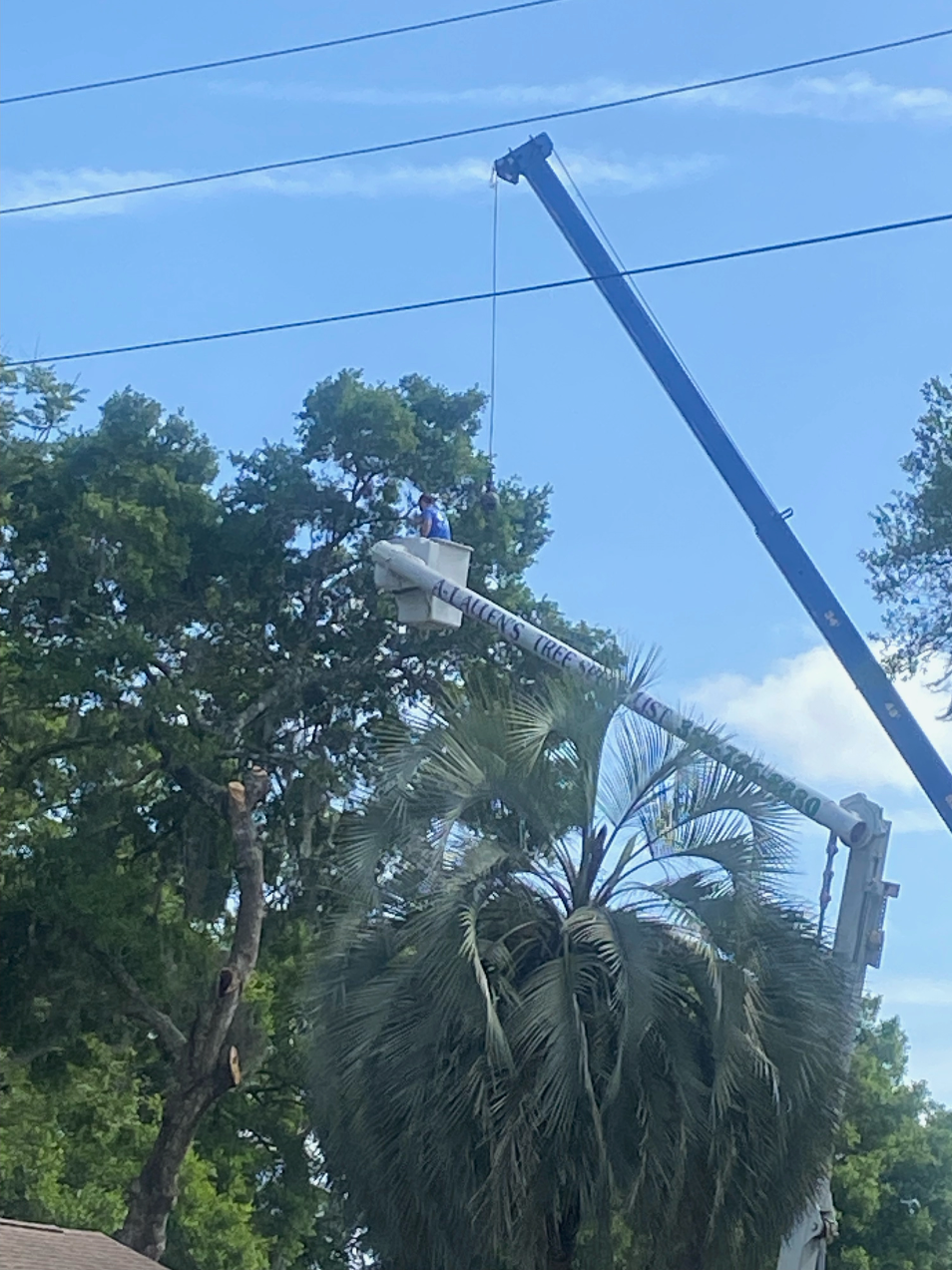
Chopping involves climbing the tree or using bucket trucks to reach upper sections, then making sequential cuts that reduce height incrementally while rigging controls each piece's descent. The crew sets landing zones for trunk sections and limbs, using ropes to guide wood away from vulnerable areas. Each cut is calculated based on weight distribution and remaining balance, preventing the trunk from splitting unpredictably or barber-chairing as tension releases.
Request a site evaluation to determine whether your tree's location and surrounding obstacles require chopping rather than standard removal techniques.
Why Controlled Cutting Works for Tight Spaces
Chopping allows removal in yards where drop zones measure only a few feet in any direction, situations that would make conventional felling impossible without accepting property damage. The crew works from top to bottom, removing small sections first to reduce weight before addressing the main trunk. Rigging systems distribute loads across multiple anchor points, preventing shock loads that could snap limbs or pull hardware loose during lowering operations.
After chopping is complete, you'll see the tree removed without disturbed fencing, intact landscaping, and undamaged structures that previously sat within the tree's potential fall radius. The yard remains fully usable with no collateral damage requiring repairs, and ground crew members clear sections as they're lowered, maintaining safe working conditions throughout the process. Properties with mature trees in confined areas become accessible for new construction, pool installation, or expanded outdoor living spaces once the obstruction is gone.
Chopping focuses on safe dismantling and does not include grinding the remaining stump or removing root systems, which are scheduled as follow-up services if needed for your landscaping plans. All cut wood and debris are hauled off-site as part of the standard service.
Questions Before Starting Your Project
Property owners in Inverness often ask about safety measures, equipment requirements, and how chopping differs from other removal methods.
What makes chopping necessary instead of felling the whole tree?
When clearance in all directions is less than the tree's height, or when valuable property features surround the trunk, sectional dismantling prevents uncontrolled impact that would damage fences, air conditioners, or adjacent structures.
How do you prevent sections from swinging into my house?
Rigging ropes are anchored to stable points and tensioned before cuts are made, allowing ground crew members to control each piece's descent path and set it down precisely in designated landing zones away from structures.
Can chopping be done without damaging my lawn?
The crew uses plywood mats under high-traffic areas and landing zones to distribute weight and protect turf, though some ground disturbance is unavoidable when moving large trunk sections across soft or saturated soil common in Citrus County yards.
What equipment is required for this type of work?
Projects typically involve climbing gear, rigging ropes rated for the loads involved, chainsaws for sectional cuts, and sometimes bucket trucks if the tree's condition makes climbing unsafe due to decay or structural instability.
How long does chopping take compared to standard removal?
Controlled dismantling requires more time than open-area felling due to rigging setup, sequential cutting, and careful lowering of each section, with most residential trees taking four to eight hours depending on height and complexity.
A-1 Allen's Tree Specialist tailors chopping methods to match your property's specific layout and obstacles. Schedule a consultation to discuss your tree's location and develop a removal approach that protects surrounding structures.